Wellness
Put Pen to Paper: Journaling as a Mindfulness Tool and How to Start
Forget the meditation app subscriptions — Saint-Tropez's wellness crowd is turning to blank notebooks as the most honest mirror they can find.
4 min read
Updated 5 h ago
Wellness
Forget the meditation app subscriptions — Saint-Tropez's wellness crowd is turning to blank notebooks as the most honest mirror they can find.
4 min read
Updated 5 h ago
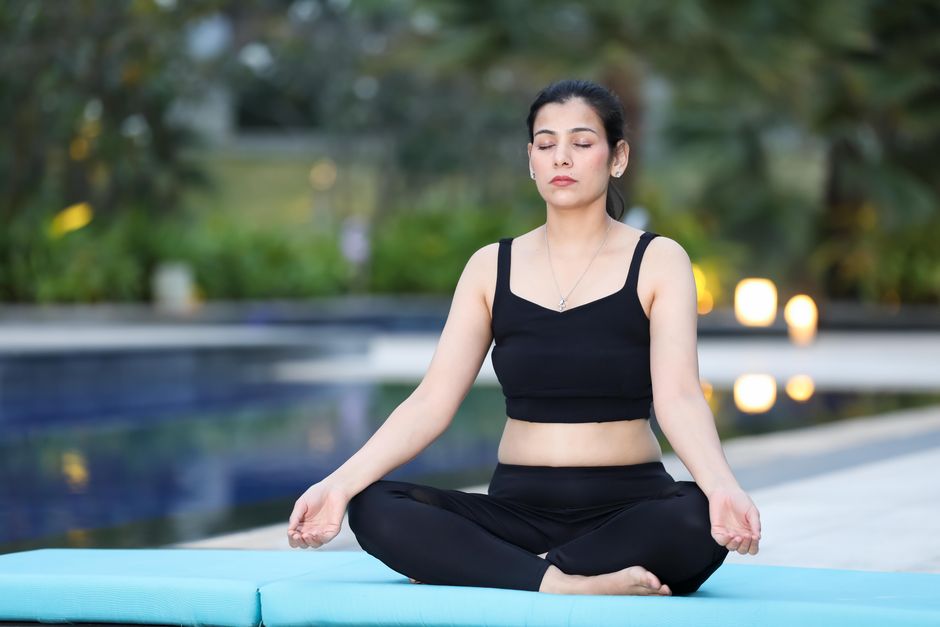
Sales of premium journals at the Maison de la Presse on Quai Suffren jumped roughly 30 percent between January and June 2026, according to staff there, and the shop has reordered its Leuchtturm1917 stock three times since March. The trend is not accidental. Across the Var coast, wellness instructors and general practitioners alike are pointing to structured journaling — not passive diary-keeping, but intentional, prompt-driven writing — as one of the more accessible mindfulness practices available without a prescription or a studio membership.
The timing matters. Conversations about hormonal health, burnout and the quiet erosion of professional purpose have moved firmly into the mainstream this summer. When people feel pulled in too many directions, the instinct is often to reach for a screen-based solution: a meditation app, a sleep tracker, a mood-monitoring platform. Journaling offers the opposite dynamic — a forced slowdown, a single point of focus, no notifications. Neurological research published in Psychosomatic Medicine in 2023 found that expressive writing sessions of as little as 15 minutes, sustained over four consecutive days, measurably reduced cortisol markers in participants. Fifteen minutes. A pen. Paper. The barrier to entry is almost embarrassingly low.
Le Centre de Bien-Être Tropézien, tucked off Rue Gambetta near the old citadel quarter, has been running a six-week Écriture Consciente programme since April. The sessions, capped at eight participants, meet on Tuesday mornings and combine ten minutes of breathwork with thirty minutes of guided journaling using structured prompts — questions like "What did I resist today?" or "Where did my attention actually go?" — before a group reflection period. Spaces for the autumn cohort, which opens in September, filled within four days of the announcement in June. Fees run at €120 for the full six weeks, cheaper than a single session with many local therapists.
Further along the waterfront, the Yogi Tropez studio on Avenue du Général Leclerc incorporated a ten-minute journaling close into its Saturday morning Yin yoga classes earlier this year. Instructors there describe it as a way of locking in whatever emotional or physical release the practice generated — a kind of cool-down for the nervous system rather than just the muscles. The studio stocks small softcover notebooks at the front desk for €6 each, and the instructor team developed their own set of thirty daily prompts available as a printed card for €2. Low-tech, deliberately so.
The common mistake is treating the blank page as an exam. Every wellness professional in this space says the same thing: remove the performance pressure immediately. You are not writing for a reader. You are not producing content. You are, in the most literal sense, just moving thought from inside your skull onto an external surface so you can look at it.
Start with three prompts, not free writing. Research from the Greater Good Science Center at UC Berkeley supports prompt-based entry points over open-ended journaling for beginners — the structure reduces the cognitive friction that makes people quit. Three prompts that consistently appear in mindfulness-based journaling frameworks: What am I noticing in my body right now? What is one thing I am carrying that I did not choose to carry? What would feel like enough, today?
Write for ten minutes. Set a timer on your phone, then put the phone face-down. Do not edit as you go. Do not re-read until the session is complete. Keep the notebook somewhere visible — on the kitchen table in the morning, or beside the sunlounger if you are lucky enough to be spending July in the Golfe de Saint-Tropez. Habit research consistently shows that environmental cuing, placing the object where the habit is meant to happen, outperforms willpower as a consistency mechanism.
For residents who want structured guidance before diving in alone, the Centre de Bien-Être Tropézien offers a single introductory drop-in session on the first Friday of each month for €15. The next one falls on 4 July. A notebook from the Quai Suffren Maison de la Presse costs €14.50. That is the full investment required to start.

Wellness

Wellness

Wellness
Wellness
About this article
Published by The Daily Saint-Tropez
Spread the word
Daily brief
Free, in your inbox before 7am. Weekdays.
The Daily Network — local news across Australia